Home Drone Security Systems: A Practical Homeowner Guide
Traditional home security has a fundamental flaw: it is reactive by design. Cameras record. Alarm panels beep. Monitoring centers call. But by the time any of that happens, the person on your property has already done what they came to do.
A home drone security system changes the equation. Instead of recording what happened, it responds while it is happening — deploying an aerial unit to verify, observe, and document in real time.
What Is a Home Drone Security System?
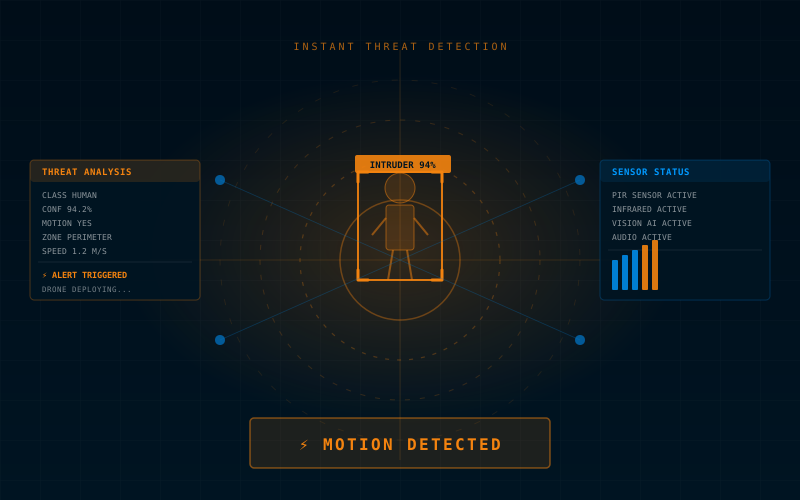
A home drone security system pairs a dock-housed drone with your existing perimeter sensors. When a sensor triggers — a motion detector, a fence alarm, a camera AI alert — the system automatically launches the drone based on rules you configure. The drone flies to the area that triggered the alert, streams live video to your phone, and logs the full event with timestamped records.
The key distinction from traditional cameras: the drone can cover any area of your property on demand, not just a fixed field of view. It sees what triggered your alert — not just what it happened to be pointing at.
How Does the Drone Know Where to Go?
Modern drone security platforms use policy-driven workflows. You define a virtual geofence around your property, connect your sensor inputs, and configure which alerts should trigger which drone responses. The system executes your rules — deploying to the zone associated with the triggered sensor, following your configured flight path, and returning to dock when the event is resolved.
You can also require manual approval before any launch — the system alerts you, you review it, and you approve the deployment. You stay in command at every step.
What Kind of Evidence Does It Generate?
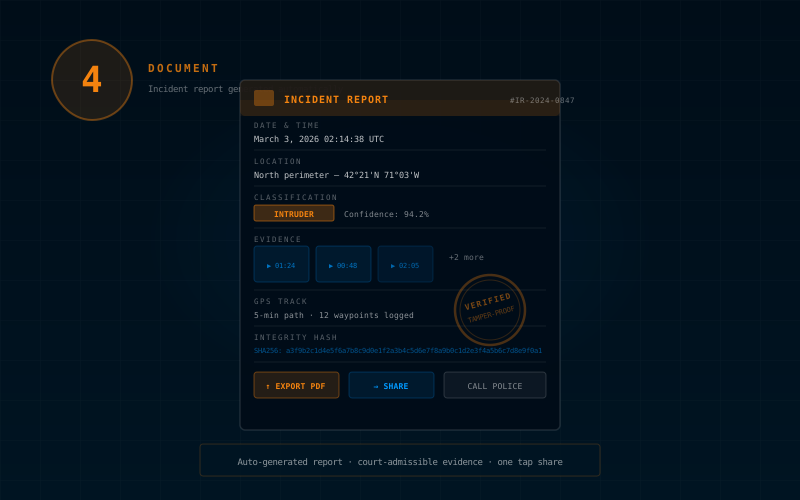
This is where drone security meaningfully surpasses traditional cameras for homeowners dealing with trespass, theft, or property damage. A well-designed system generates: timestamped video of the event, GPS flight path logs, sensor trigger records, and chain-of-custody export packages suitable for law enforcement and insurance claims.
Some platforms use cryptographic signing — each piece of evidence is mathematically bound to the original event in a way that detects any subsequent tampering. That kind of integrity is increasingly relevant for insurance disputes and legal proceedings.
What Should Homeowners Look For?
Owner control. Can you configure your own launch policies, geofences, and approval rules? Or does the system operate on fixed parameters you cannot adjust?
Evidence integrity. Are incident records signed, timestamped, and exportable in a format you can share with insurers or law enforcement?
Safety constraints. Does the system enforce geofences, return-to-home fail-safes, and flight boundaries that you can review and customize?
Hardware flexibility. Are you locked into proprietary hardware, or does the platform work with off-the-shelf drones and sensor ecosystems?
Is It Legal to Fly a Security Drone Over My Own Property?
Generally, yes — homeowners can fly drones over their own property within FAA regulatory limits. You are required to follow applicable airspace rules, which vary by location. Most residential drone security use cases involve flights within visual line of sight and below 400 feet AGL, which fall within standard recreational and Part 107 frameworks.
You should review your local ordinances as well — some municipalities have specific rules about drone use. The platform you use should make it easy to configure your flights to stay within your property boundary.
Defender Intel makes Protector Home, an autonomous drone security system built for residential and small-property owners. This article is for informational purposes only and does not constitute legal advice.