Drone Security vs. Traditional Home Security: An Honest Comparison
The home security market is crowded. Ring, Nest, ADT, SimpliSafe — each offers a version of the same core proposition: cameras that record, sensors that alert, and monitoring centers that call. They are all reactive systems. They document what happened. They do not respond to it.
Autonomous drone security is a different category. Here is an honest comparison.
Fixed Camera Systems (Ring, Nest, Arlo)
Strengths: Easy to install, affordable, familiar, integrates with smart home ecosystems, good for doorbell and entry-point coverage.
Limitations: Fixed field of view with no coverage between camera positions. Footage is only as good as your camera placement. No ability to investigate an alert — you see what the camera saw, not necessarily what triggered it. Video quality and storage are ongoing costs. Does not deter or respond to anything.
Best for: Monitoring entry points at residences where coverage gaps are acceptable.
Monitored Alarm Systems (ADT, SimpliSafe)
Strengths: Professional monitoring, fast police dispatch on confirmed alarm, established trust with insurers, simple operation.
Limitations: High false alarm rates mean many dispatches are cancelled or deprioritized. Monitoring centers cannot verify the nature of an event — they can only call you and escalate. No visual confirmation of the triggering event. Monthly fees accumulate significantly over time.
Best for: Homeowners who want professional backup response and insurance rate discounts.
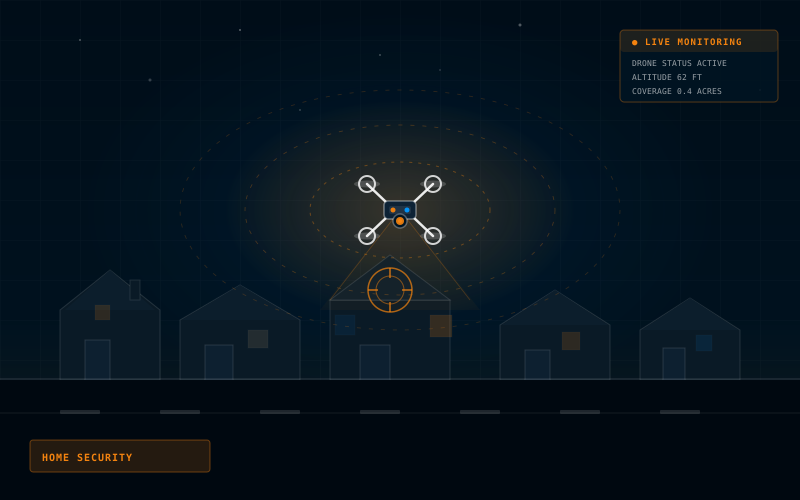
Autonomous Drone Security (Protector Home)
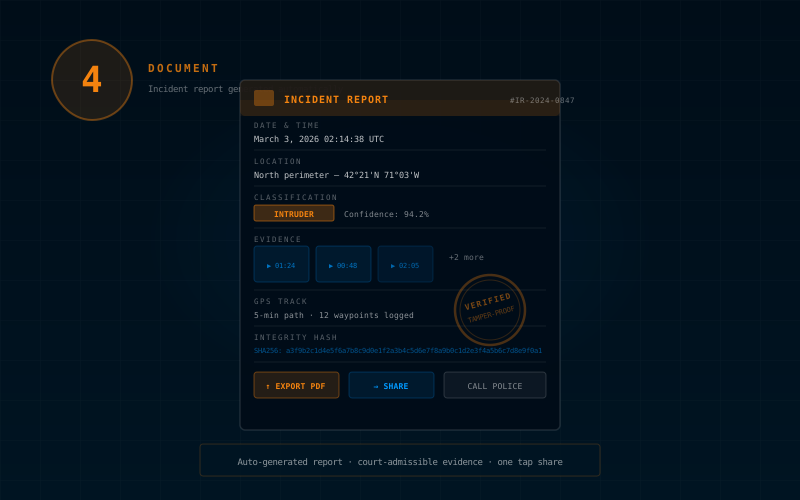
Strengths: Active aerial response instead of passive recording. Live overhead video of the triggering event within seconds. Owner-controlled policies and geofencing. Evidence-grade incident documentation. Coverage of any area on the property, not just fixed camera positions.
Limitations: Higher upfront cost and setup complexity than plug-in cameras. Requires compatible drone hardware and a dock installation. Dependent on connectivity and weather conditions for deployment. Regulatory compliance is the owner's responsibility.
Best for: Property owners who want real active response, large properties with coverage gaps cameras cannot close, and homeowners who need documentation quality beyond smartphone clips.
The Honest Bottom Line
Traditional security systems are not wrong — they solve real problems, and there is value in combining them with drone security. A Ring camera at the front door, a SimpliSafe panel for professional monitoring, and a Protector Home system for active perimeter response is a layered approach that covers everything.
But if you are choosing between passive recording and active response as your primary security posture, drone security is unambiguously more powerful for properties where coverage gaps exist and where incident documentation matters.
Defender Intel makes Protector Home, an autonomous drone security system for residential property owners. This article is for informational purposes and does not represent an endorsement of any third-party product.