How Drone Security Generates Insurance-Grade Evidence for Property Incidents
When a property incident occurs — trespass, theft, vandalism, equipment damage — the outcome is often determined by documentation quality. A blurry clip from a motion-activated camera, a vague police report, and an insurer asking for more evidence is a frustrating and expensive situation.
Autonomous drone security systems are uniquely positioned to generate the kind of documentation that actually supports claims. Here is what that looks like in practice.
What Makes Evidence 'Insurance-Grade'?
Insurance adjusters and law enforcement need: clear visual documentation of what occurred, accurate timestamps, information about where and when the event happened, and ideally, a chain of custody showing the evidence has not been altered.
Traditional camera footage checks some of these boxes — it has a timestamp and shows what happened in the camera's field of view. But it often lacks GPS context, cannot cover the full incident area, and may be contestable if the recording was stored locally and could theoretically be edited.
What Drone Security Documentation Looks Like
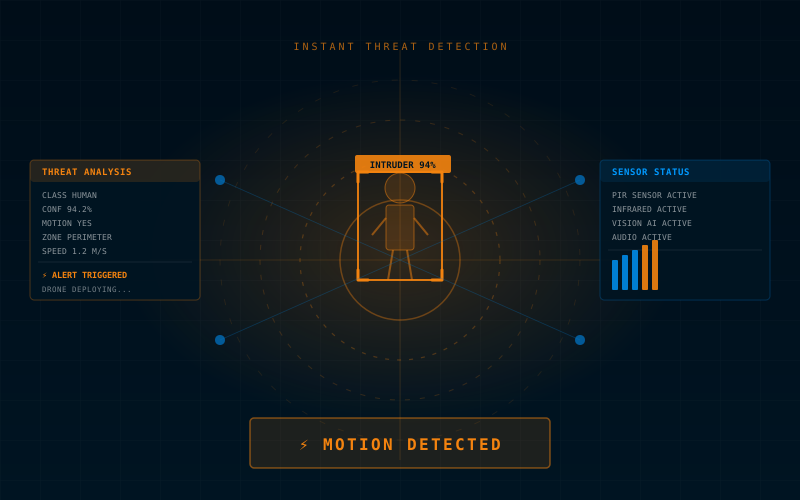
A well-designed drone security system generates an incident package that includes: the sensor trigger event with exact timestamp, the drone flight path with GPS coordinates overlaid on your property map, high-resolution aerial video of the incident area, and cryptographic signing that detects any post-capture alteration.
That package can be exported and handed directly to law enforcement or your insurance carrier. It answers the core questions — what happened, where, when, and how — in a format that is clear and verifiable.
Real-World Use Cases for Evidence Documentation
Trespass and intrusion. Aerial video showing an unauthorized person on your property, with GPS confirmation they were inside your boundary, is substantially stronger than a static camera clip.
Equipment and livestock theft. A time-stamped aerial record showing equipment present at 8pm and missing at 6am, with a sensor trigger at 2am and corresponding drone footage, creates a clear evidentiary timeline.
Property damage documentation. An aerial survey documenting storm, vandalism, or fire damage across your property gives adjusters the scope data they need for accurate claims.
Neighbor disputes. Aerial documentation of boundary conditions, fence status, or access situations can resolve or prevent disputes before they become legal matters.
A Note on Admissibility
Evidence documentation features — including cryptographic signing and chain-of-custody export — are designed to support incident documentation and integrity controls. Whether any particular record is admissible in a specific legal proceeding depends on many factors and is ultimately a legal question. Consult an attorney if admissibility is a concern in your situation.
Defender Intel makes Protector Home, an autonomous drone security system with evidence integrity features. This article is for informational purposes only and does not constitute legal advice.